In our middle school classrooms, math groupwork serves as a vibrant space where students not only tackle mathematical problems but also navigate the intricate dynamics of peer interactions and conflicts. But, peer conflicts is often sighted as on of the key reasons to avoid this pedagogy (Ormrod, 2020). Our recent study explores insights on how seventh graders perceive and manage these conflicts, providing valuable insights for educators who are keen to foster better collaboration and conflict resolution among students.
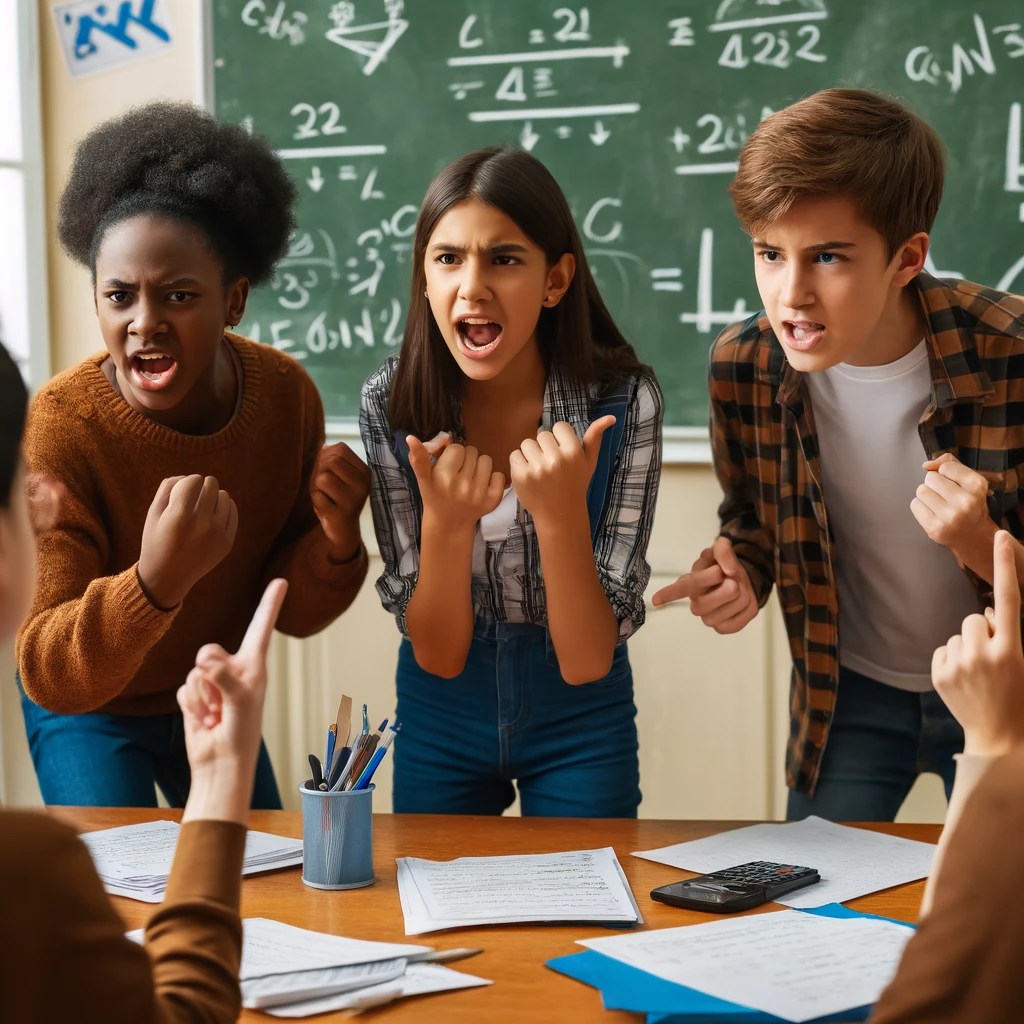
Image created by Palak Shah for representation purpose of a diverse group of middle grade students arguing during math groupwork, using DALL.E.
At the heart of our research lies the exploration of how students view conflicts. It’s enlightening to see that many students perceive conflicts positively, viewing them as opportunities to negotiate differences and enhance group dynamics. This perspective is crucial as it strongly influences the conflict management styles students adopt—whether they compromise, integrate, dominate, oblige or avoid conflicts; reflecting varying degrees of concern for themselves versus others.
One of the most compelling aspects of our study is its focus on incremental theory—the belief that people can change. This theory significantly shapes how students perceive their peers and handle conflicts. We found that students who embrace this view fully, tend to approach conflicts more constructively, seeking compromises and solutions that benefit the entire group rather than asserting dominance.
Several other researches that we referred to also highlights gender differences in how conflicts are handled. Boys often resolve disputes quickly and directly, while girls typically seek to avoid conflicts, preferring to communicate more and build consensus (Rafelli 1997; Black, 2000). These behaviors underscore the nuanced ways students navigate their social environments, influenced by broader societal expectations and individual personality traits.
For us, educators, these findings highlight the importance of integrating conflict resolution skills into regular classroom activities. By understanding the underlying perceptions and styles of conflict management among students, we can facilitate discussions and group activities that promote healthier interactions and more effective collaborative learning.
As we move forward, we advocate for a more nuanced understanding of peer conflicts (read more for our definition) in educational settings, suggesting that conflict resolution training be integrated into the curriculum. Teaching students to manage disagreements constructively prepares them not only for academic success but also builds essential life skills in communication, empathy, and cooperation.
By bringing these insights into the classroom, we can transform typical peer conflicts into powerful learning opportunities, preparing students to navigate the complex social landscapes of their future academic and professional careers. This is not just about making peace between students—it’s about equipping them with the tools to build a more collaborative, understanding world.
References:
Ben‐Ari, R., & Hirshberg, I. (2009). Attachment styles, conflict perception, and adolescents’ strategies of coping with interpersonal conflict. Negotiation Journal, 25(1), 59-82.
Black, K. A. (2000). Gender differences in adolescents’ behavior during conflict resolution tasks with best friends. Adolescence, 35(139), 499.
Ormrod, J. E. (2020). Human learning. New York: Pearson.
Raffaelli, M. (1997). Young adolescents’ conflicts with siblings and friends. Journal of youth and adolescence, 26(5), 539-558.
 Equitable Math Groupwork